

MLK: Strength in Brokenness
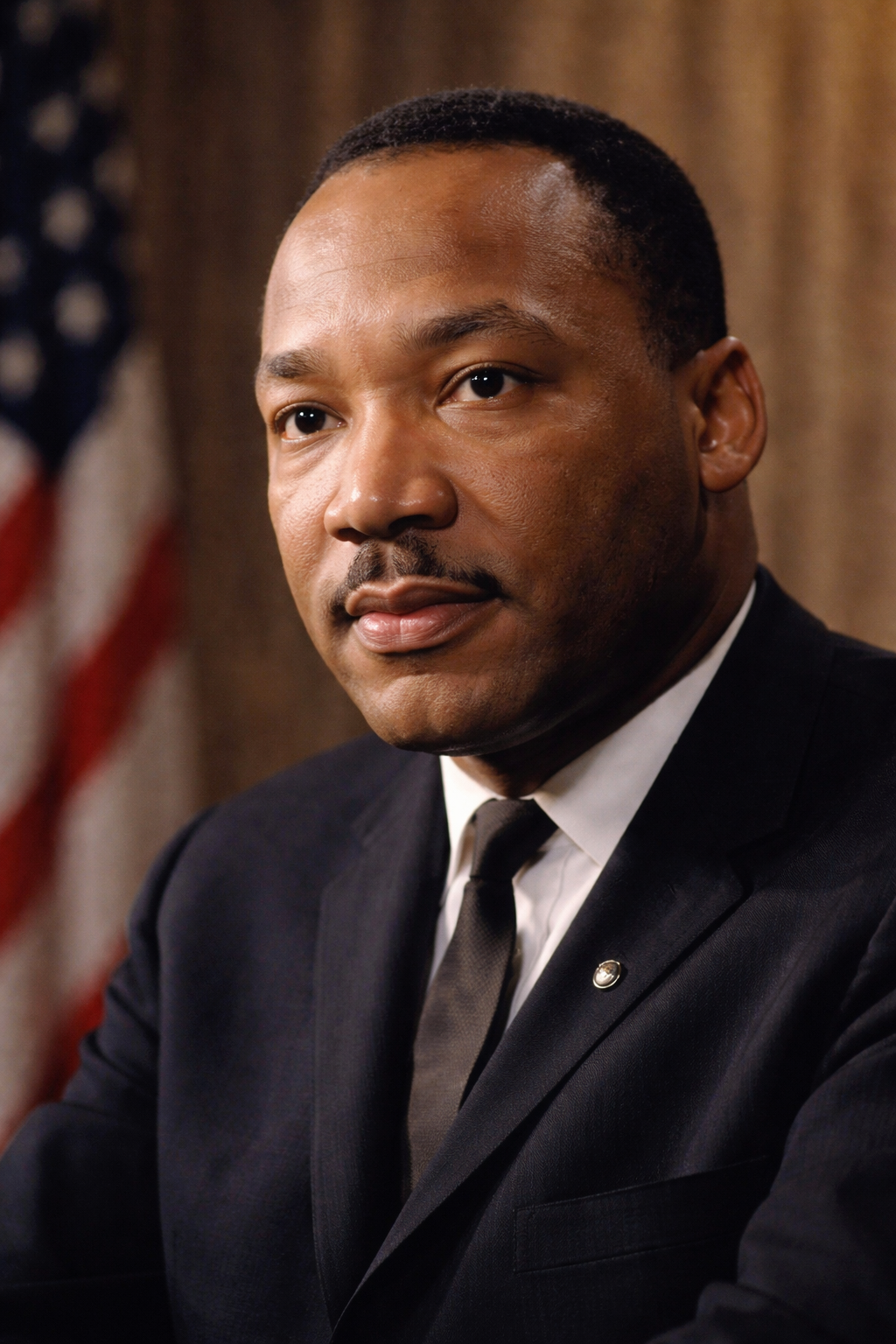
We love our heroes. We need them, really, people whose lives point us toward something greater, whose courage inspires us to be better than we thought we could be. But if we're honest, we sometimes make our heroes a little too shiny. We smooth out their rough edges, tuck away their failures, and place them on pedestals where they never quite belonged.
And then, when we learn the full truth about them, their struggles, their mistakes, their very human shortcomings, we don't always know what to do. Do we dismiss them entirely? Do we pretend we never heard the harder parts of their stories?
Or maybe there's another way. Maybe the messiness of their lives isn't something to explain away, but something that actually reveals a deeper truth about how God works in this world.
This weekend, as we honor the legacy of Martin Luther King Jr., I've been thinking about imperfect heroes, and how God has always had a habit of using broken people to accomplish beautiful things.
A Man After God's Own Heart
If you've spent any time in church, you've probably heard King David described as "a man after God's own heart." It's a remarkable title, given directly by God Himself. David was a shepherd boy who became Israel's greatest king, a warrior who defeated giants, a poet whose psalms still comfort us thousands of years later.
And yet.
David was also deeply flawed. He abused his power. He committed adultery with Bathsheba, then orchestrated the death of her husband Uriah to cover his sin. He was sometimes a neglectful father.
His household was marked by conflict and tragedy.
When we read David's story honestly, it's uncomfortable. How could someone who did those things be called a man after God's heart?

The answer, I think, lies not in David's perfection but in his posture. When the prophet Nathan confronted David about his sin, David didn't make excuses. He didn't justify himself or shift blame. He fell on his face and repented. Psalm 51, that raw and beautiful prayer of confession, came from this moment of brokenness.
David's heart wasn't perfect, but it was soft. It was teachable. When he sinned, he turned back. And God, in His mercy, continued to work through David's life to bless Israel and ultimately to bring about the lineage of Jesus.
God didn't use David because David was good enough. God used David because God is gracious enough.
A Dream and a Dreamer
When we think of Martin Luther King Jr., we think of the March on Washington, the soaring rhetoric of "I Have a Dream," the moral clarity that helped bend the arc of history toward justice. King was a pastor, a prophet in his own right, a man who called America to live up to its highest ideals while grounding his message in the love and justice of Jesus.
His legacy is extraordinary. His courage changed a nation.
But Dr. King was also a man, fully human, with struggles and failures that historians have documented over the years. He wrestled with doubt. He faced immense pressure that took a toll on his health and his family. And yes, there are aspects of his personal life that don't match the polished image we often hold.
This isn't comfortable to acknowledge. But I don't think honesty diminishes his legacy: I think it actually deepens our understanding of how God works.
King himself never claimed to be perfect. In his sermons and writings, he spoke openly about the need for grace, about the reality of sin, about his own dependence on God. He knew he was a flawed vessel. And yet, God used him to speak truth to power, to awaken consciences, to help set captives free.
Just like David.
A Pattern in Scripture
If we look through the Bible, we find this pattern again and again. God doesn't wait for perfect people to show up: because they never do.
Think of Peter, the disciple who swore he would never abandon Jesus, then denied him three times before the rooster crowed. Peter's failure was public and devastating. And yet, Jesus restored him. Peter became a cornerstone of the early church, preaching boldly and shepherding the first believers.
Or consider Paul, who before his conversion was Saul: a man who hunted down Christians and approved of their executions. Paul never forgot what he had been. He called himself the "chief of sinners." But he also understood, perhaps more deeply than anyone, that God's grace was sufficient. That same grace transformed him into the apostle who would spread the gospel across the known world.
Peter's denial. Paul's violence. David's abuse of power. These weren't minor slip-ups. These were serious, consequential failures. And yet, God didn't discard these men. He redeemed their stories and wove them into something larger than themselves.
What This Means for Us
So what do we do with imperfect heroes?
First, I think we hold them honestly. We don't whitewash their failures, and we don't reduce them to their worst moments either. We let them be fully human: capable of both remarkable good and real harm. That's the truth of every human life, including our own.
Second, we remember that God's purposes are bigger than any one person. David's failures were real, but God's promise to bring salvation through his lineage was unstoppable. King's imperfections were real, but the movement for justice was larger than any single leader. When we place too much weight on any human hero, we set ourselves up for disappointment. But when we remember that God is the true author of redemption, we can appreciate human instruments without making them into idols.
And third: maybe most importantly: we let their stories give us hope.
Because if God could use David, with all his failures, then maybe God isn't finished with us either. If God could work through Peter after his denial, through Paul after his persecution, through King amid his struggles: then perhaps our own brokenness doesn't disqualify us from being part of what God is doing in the world.
This is the scandal of grace. God chooses imperfect people. Not because our failures don't matter, but because His mercy is greater than our sin. Not because character doesn't count, but because transformation is always possible.
An Invitation
As we honor Martin Luther King Jr. this weekend, I want to invite us to sit with this tension. Let's celebrate the courage and vision that God worked through his life. Let's also humbly acknowledge that he, like all of us, was a man in need of grace.
And let's turn the mirror on ourselves.
Most of us will never lead movements or write psalms that endure for millennia. But all of us are invited into the same story: a story where God uses ordinary, flawed, broken people to bring glimpses of His kingdom into the world. Not because we've earned it. Because He's gracious.
Maybe today you're carrying shame about something in your past. Maybe you feel disqualified from being useful to God. Maybe you've been holding yourself to a standard of perfection that no human being has ever met.
If that's you, I hope David's story and King's story offer you a gentle word: God isn't waiting for you to get it all together. He's inviting you, right now, just as you are, into something beautiful.
The question isn't whether we're perfect. The question is whether our hearts are soft enough to be shaped by His hands.
A Prayer for Imperfect People
Lord, thank You for not giving up on broken people.
Thank You for David, for Peter, for Paul: and for every flawed servant You've used throughout history.
Help us hold our heroes honestly, without cynicism or idolatry.
And help us believe that You're not finished with us either.
Soften our hearts. Use our lives.
Not for our glory, but for Yours.
Amen.
#Jesus_NtheKnow


Copyright 2026 Issachar Church
All Rights Reserved.